Headline news

Oil Production in the Polar Regions

by Kjell Aleklett and Colin Campbell

Oil in the Polar region

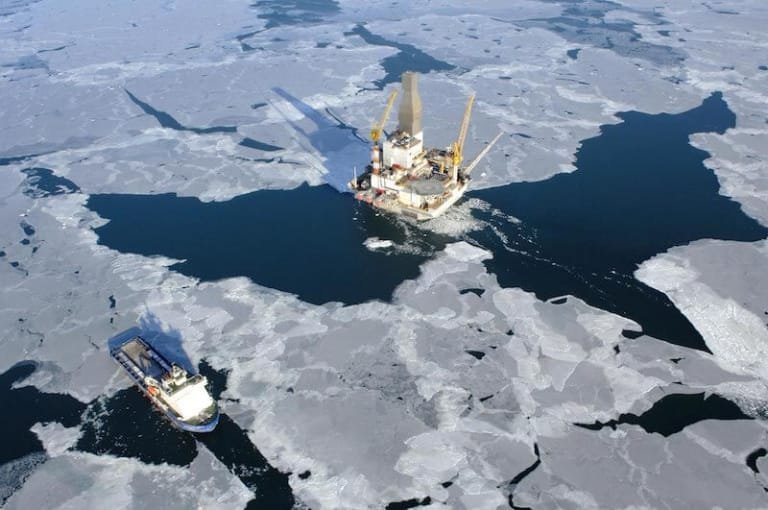
Today, the Arctic Council’s eight foreign ministers from Sweden, Norway, Denmark, Finland, Iceland, Russia, Canada and the USA meet in Sweden to discuss, among other things, oil production in the Arctic. They will attempt to agree on a binding joint treaty regarding what preparations will exist in case of an oil spill/accident. The amount of oil that is accessible for production is limited and large fields are required for such production to be profitable. The thing that distinguishes the polar region from e.g. the area between the UK and Norway is that the oil-bearing sedimentary layers are much older and have been subjected to more extreme conditions than those under the North Sea. This means that the likelihood of finding oil is less. So far it is mainly in Alaska that they have been able to extract oil but the reserves there have begun to run out.

Did the Russian jets practice defense of the oil export route in the Baltic Sea?

At the end of April the newspaper Svenska Dagbladet led with the story that “Russian aircraft practiced attack against Sweden” (This is an article in English about this event). In the explanatory graphics accompanying the article we read, “Instead of flying their usual route south out in the middle of the Baltic towards Kaliningrad, the six Russian aircraft turned towards Gotska Sandön [an uninhabited Swedish island]” In an article in DN on 10 May headed, “Russia did not conduct exercises against Swedish targets” our foreign minister Carl Bildt asserted that “There is no foundation in substance for the idea that they practiced an attack against Sweden”. He would not explain what led him to make this statement. We who grew up in the shadow of the threat from the Soviet Union and who remember how every maneuver during our military service ended with a victory over the enemy from the east possibly have difficulty imagining any other reason for the Russian movements than a planned attack against Sweden.

New natural gas discovery in Australia

I have just picked up this news on a new natural gas discovery off the coast of Western Australia. The idea is for the gas to be cooled in order to liquefy it. They do not state the volume of this discovery but the text at the top of the figure states that 21 discoveries since 2009 together amount to 10 trillion cubic feet of resources”. Recalculated as oil equivalents this is around 1,900 million barrels. We will see how significant this discovery is when they convert these resources into reserves.

The Oil and Gas Prime Ministers of the UK

Margaret Thatcher, one of the United Kingdom's greatest leaders has died. We can hear on the radio and see on TV how she is praised for her political deeds. Many consider that it was the changes in the economic system and her economic liberalism that led to the UK's economic success in recent decades. Of course those factors may have had a significant influence but what is not mentioned is that Margaret Thatcher took power in the UK when it was in a very favourable position - i.e. the oil companies had found oil and natural gas under the North Sea and production was increasing. The need to import oil and gas reduced and the UK became an oil exporter. The increased gas production meant that the UK could convert away from coal for heating and so the coal mines could be shut down. Of course, there was much conflict over this but it was obvious that coal could not compete with gas. This was also good news for the environment.

The Voyageur oil sands project is stopped

According to the World Energy Outlook 2012 report, the IEA is anticipating production of tight oil, shale oil etc., will increase dramatically in the USA at the same time as Canada’s oilsands industry will thrive. In this light, the information released by Canada’s largest oil company Suncor Energy Inc. on 27 March must come as a great disappointment for the IEA. Suncor has decided to abandon its upgrading project Voyager. We can read in an article in the Financial Post that, “Canada’s largest oil company said Wednesday the multibillion-dollar plant, a joint venture with France’s Total SA, will not be built”. The installation was intended for upgrading of bitumen from oilsand into synthetic crude oil. Production was to have been 200,000 barrels per day. The business plan was that the synthetic crude oil would be sent to the USA for refining, but when that plan was drawn up they had not anticipated the developments in the Bakken field: “Things change,” said one executive in the refining business.

Peak Oil conference in Doha, Qatar, April 3-4

The next very important Peak Oil event will be the Peak Oil conference in Doha, Qatar 3-4 April 2013: Peak Oil: Challenges and Opportunities for the GCC Countries. Read about the conference and if you are interested you can participate.
Hompage: http://fairforum.org/oil/
Homepage in English: http://fairforum.org/oil/en/

Iraq war: 10 years on

It is now ten years since the Second Gulf War began. During recent days I have seen several programs on BBC World News that have taken up various aspects of the war. The Guardian has a series of articles collected under the headline ”Iraq war: 10 years on". What amazes me is that none of the articles discuss the connection of the war to the oil in Iraq.

In contrast, if one visits CNN this connection is mentioned and the following headline gives the message clearly: ”Why the war in Iraq was fought for Big Oil”.

“Yes, the Iraq War was a war for oil, and it was a war with winners: Big Oil. It has been 10 years since Operation Iraqi Freedom’s bombs first landed in Baghdad. And while most of the U.S.-led coalition forces have long since gone, Western oil companies are only getting started.

Before the 2003 invasion, Iraq’s domestic oil industry was fully nationalized and closed to Western oil companies.

Comments on the hearing on “American Energy Security and Innovation” before the Subcommittee on Energy and Power

“Many small creeks make a large stream” is a Swedish saying that describes well the production of shale oil and shale gas. Equivalent English sayings are, “Many a little makes a mickle”, (that originated in Scotland and then President George Washington used in a text of 1793) and “Many drops make a river”. If one looks at a map of the Bakken showing only the top 20% best producing wells one cannot deny that there are many “drops”. The hearing that the Subcommittee on Energy and Power (US House of Representatives) held on 5 February, investigated whether all these many wells can amount to “American Energy Security”.

Bakken_dropps_of_wells

The Oil & Gas Journal (OGJ) is one of those for which the Global Energy Systems research group has a subscription.

Comments on US Energy Secretary Chu’s plans to leave the DOE

Steven_Chu

The USA’s Secretary of Energy, the Nobel Prizewinner Steven Chu, has decided to leave Washington and return to California. His thoughts about his past four years as Secretary of Energy were given in a letter to the employees of the Department of Energy (read the letter). Before we look a little more closely at that letter I would like to remind you that there were many of us who had great hopes when he was first appointed – at last a person with a scientific background would control the USA’s Department of Energy. Today there are many who are disappointed. There are those who think that the transition to renewable energy was a flop. They think that the money invested in that did not give the expected return, but there are certainly more who think that the investment was much too small.

Der Spiegel: “Full Throttle Ahead: US Tips Global Power Scales with Fracking”

Barack Obama

In the German in issue 5/2013 (January 28, 2013) of DER SPIEGEL you can read about fracking, shale gas and shale oil from a European horizon. The article is translated to English and presented in Spiegel Online International with the title “Full Throttle Ahead: US Tips Global Power Scales with Fracking”.

Syndicate content